


For over a millennium, Sicily was home to one of the oldest Jewish communities in Europe. From the Roman period through the Middle Ages, Jews contributed significantly to the island’s socioeconomic life, leaving behind a rich cultural and historical heritage that curious travelers can still discover today.
Although some scholars trace Jewish presence to the aftermath of the Second Temple's destruction in 70 AD, archaeological evidence confirms the existence of a community deeply integrated into the social fabric of Sicily from the 3rd to the 15th century.
For those who want to explore Jewish heritage in the central Mediterranean, Sicily offers an intense and moving journey. Beneath Baroque facades and sunlit squares lies a deep Sephardic past: synagogues transformed into churches, ritual baths carved into bedrock, and symbols engraved into stone that still speak across centuries.
Jewish Life in Sicily Before 1492
By the 15th century, historians estimate that between 30,000 and 40,000 Jews lived in Sicily, spread across more than fifty towns. The most important Jewish quarters - known as “giudecche”- were located in the port cities of Palermo, Syracuse, Messina, and Trapani, but even small inland towns also had well-established and thriving communities. Medieval Sicilian Jewry formed part of the wider Sephardic world, maintaining strong connections with North Africa, Spain, and the eastern Mediterranean.
Under Byzantine, Arab, Norman, Swabian, and Aragonese rule, Jews played essential roles as merchants, artisans, physicians, scholars, and agricultural producers. Their communities were deeply integrated into the island’s economic and cultural life, while preserving distinct religious and communal traditions.
The Foundations: Symbols in Stone (3rd – 6th Century AD)
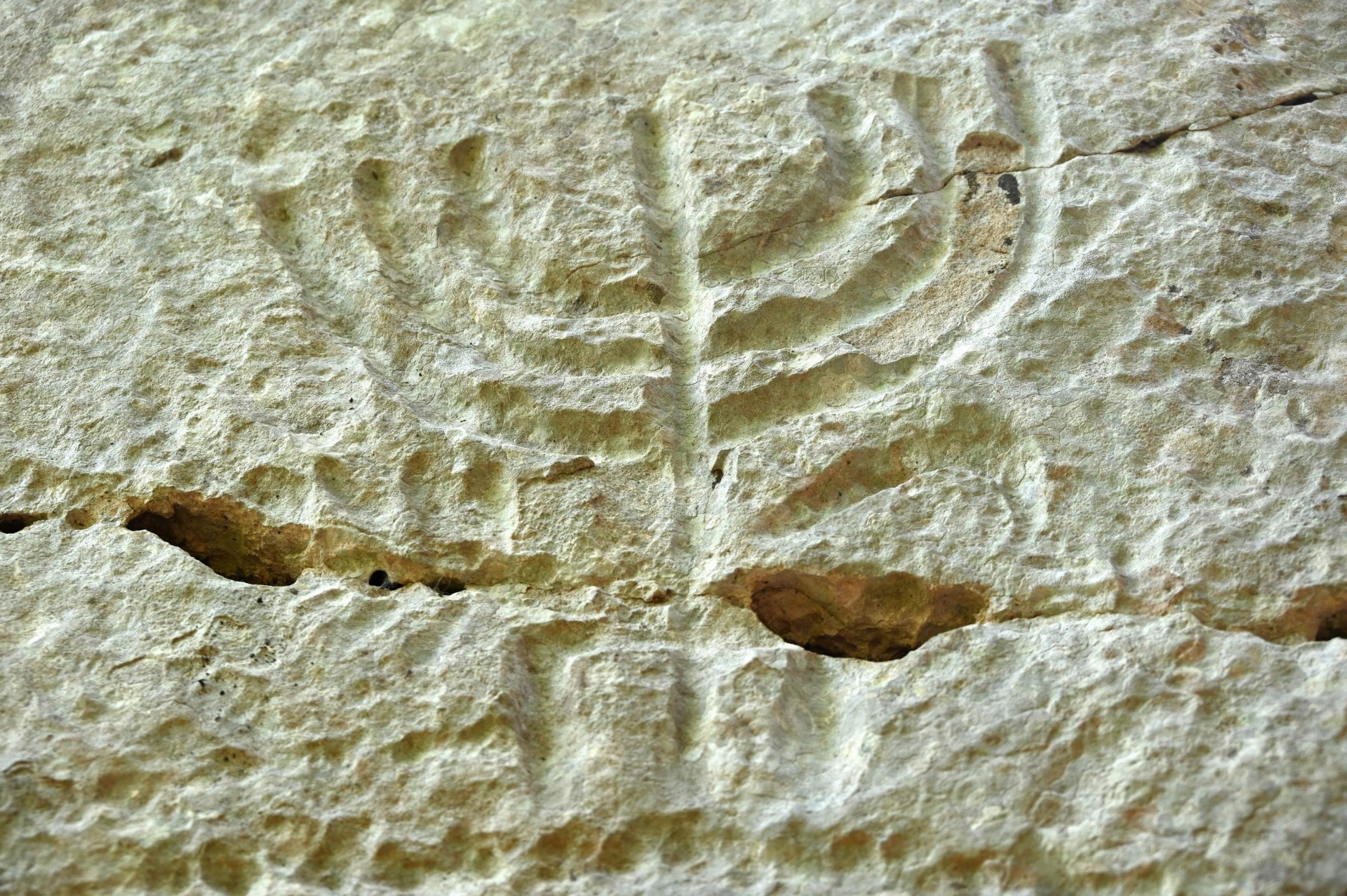
Between the late Roman and Byzantine periods, many Jews from the Middle East settled in the rural and coastal areas of southeastern Sicily. For these communities, the menorah became a distinctive symbol found on tombs and in other contexts, helping to distinguish their burials from nearby Christian ones, which often shared similar architectural forms. Originally a seven-branched lamp lit in the Temple of Jerusalem, the menorah took on a broader symbolic role after the Temple’s destruction, appearing in places of prayer and communal life.
Today’s traveler can witness this ancient presence carved directly into the rock:
- Noto Antica: on Mount Alveria, the ancient site of Noto, you can explore the so-called “Grotta del Carciofo.” Here, two seven-branched menorot are carved into the stone flanking a funerary arch (arcosolium), and recent studies in this ancient necropolis have identified five additional menorot, also carved into the rock.
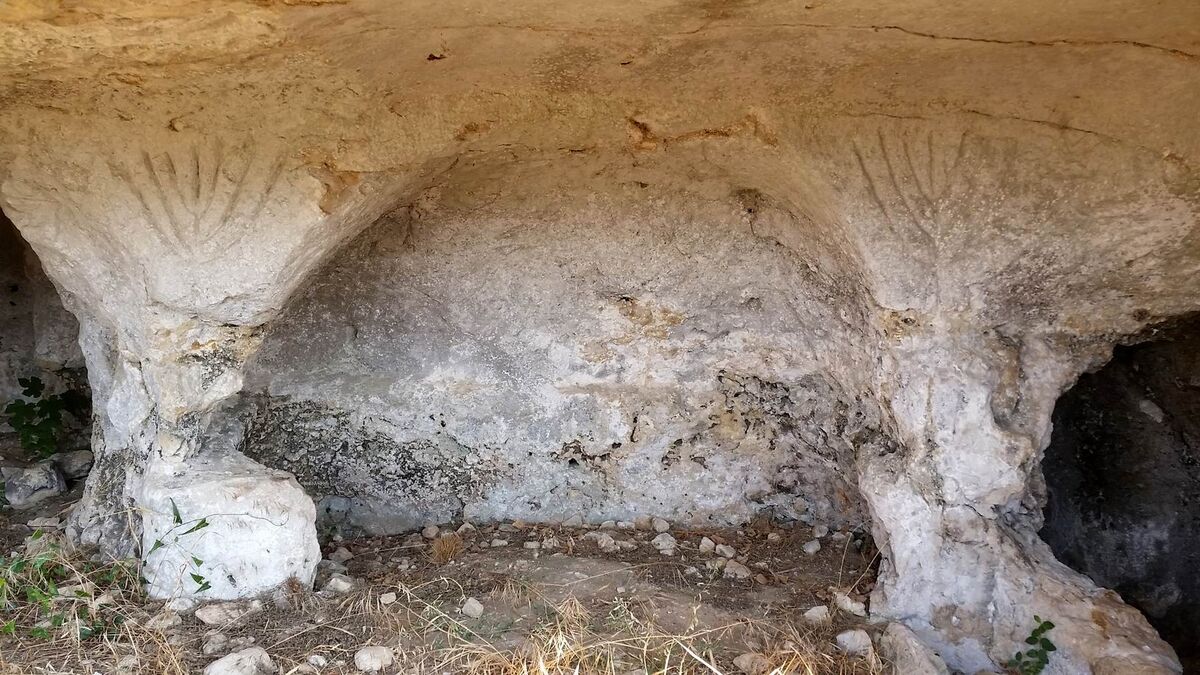 The so-called "Grotta del Carciofo". Noto Antica
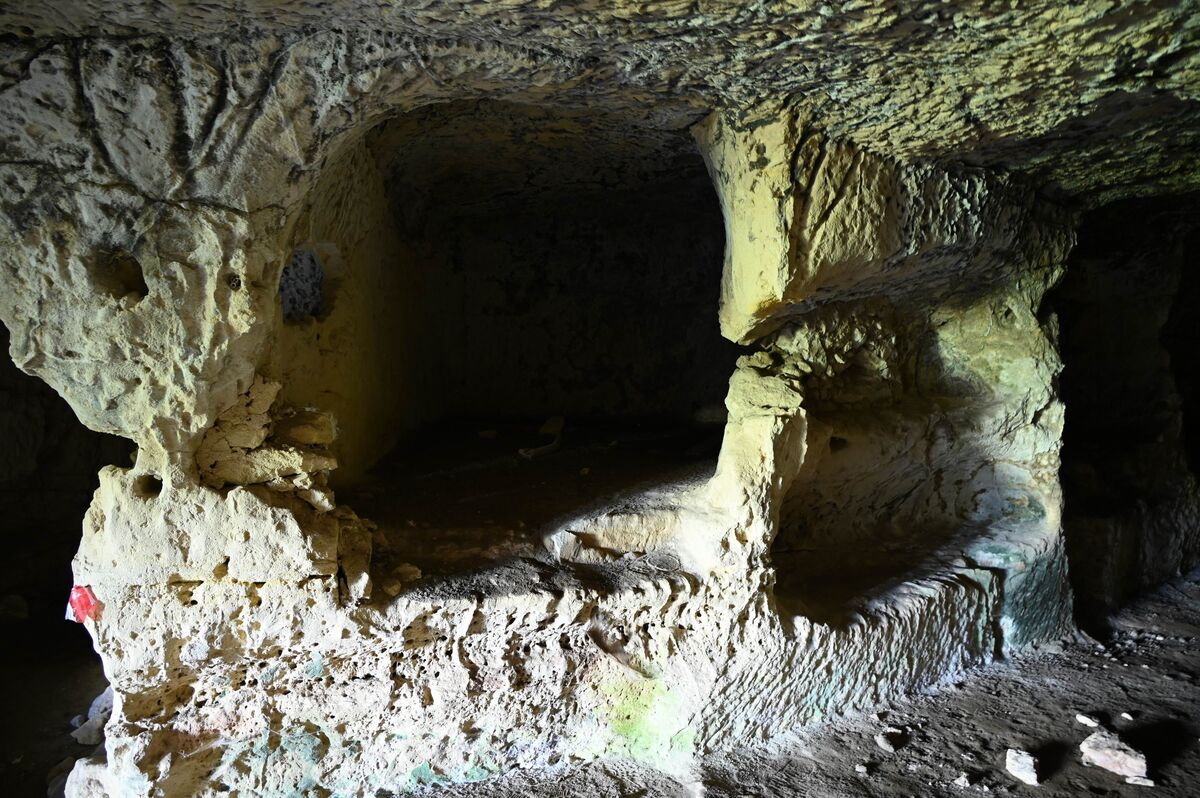 Probable Jewish Tomb. Contrada Pantanello. Noto
- Contrada Pantanello, Noto: inside a large catacomb located in Contrada Pantanello - later modified for agricultural use - there is a multiple arcosolium whose façade bears two symbols, with four and three branches respectively, which can be interpreted as the remains of lulavim (palm branches) or menorot.
- Rosolini: in Contrada Gisira, a funerary hypogeum features a seven-branched menorah on a tripod flanking the entrance. It is accompanied by a rare depiction of a nine-branched menorah, a form also attested at several other archaeological sites in Israel. Nearby, at the Case Scalarangio site, another menorah is carved alongside a shofar (ram’s horn) and lulav (palm branch)
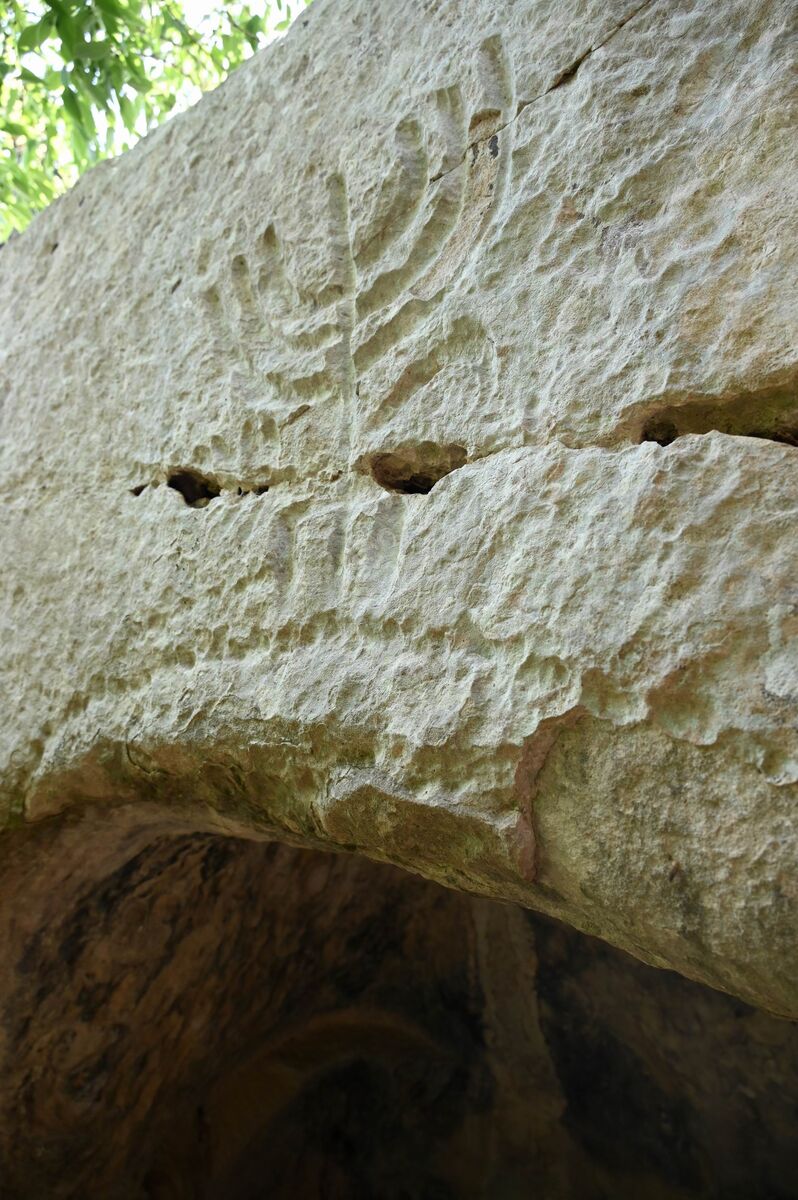 Jewish Tomb. Case Scalarangio. Rosolini
- Camarina Regional Museum: this archaeological museum houses a collection of Greek-inscribed burial slabs, including one for "Jason the child," which is decorated with a menorah.
Medieval Syracuse: The Pulse of the Giudecca
During the Middle Ages, the Giudecca of Ortigia became one of the most important Jewish quarters in the Mediterranean. Today, walking through its alleys, such as Via della Giudecca and Via Alagona, one can still feel the echo of the community’s vitality and its countless artisanal and commercial activities, also thanks to an urban layout that has preserved its original characteristics.
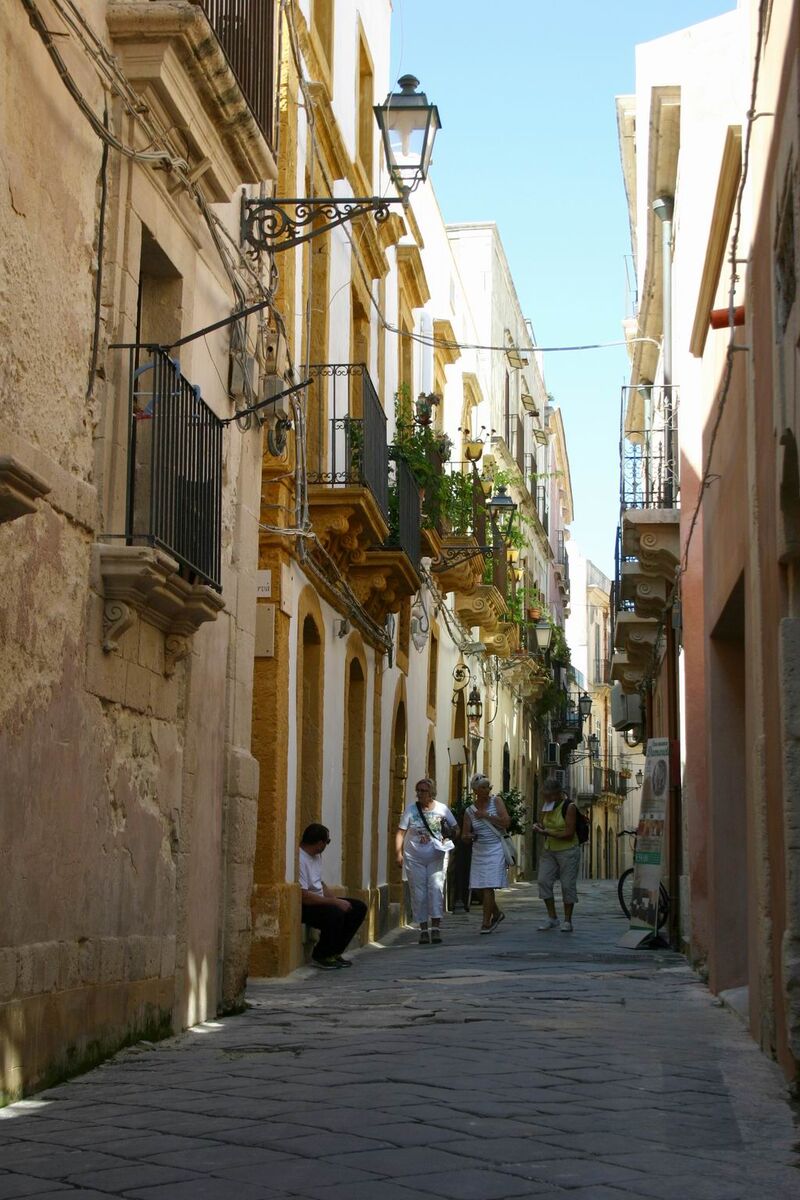 Giudecca. Siracusa
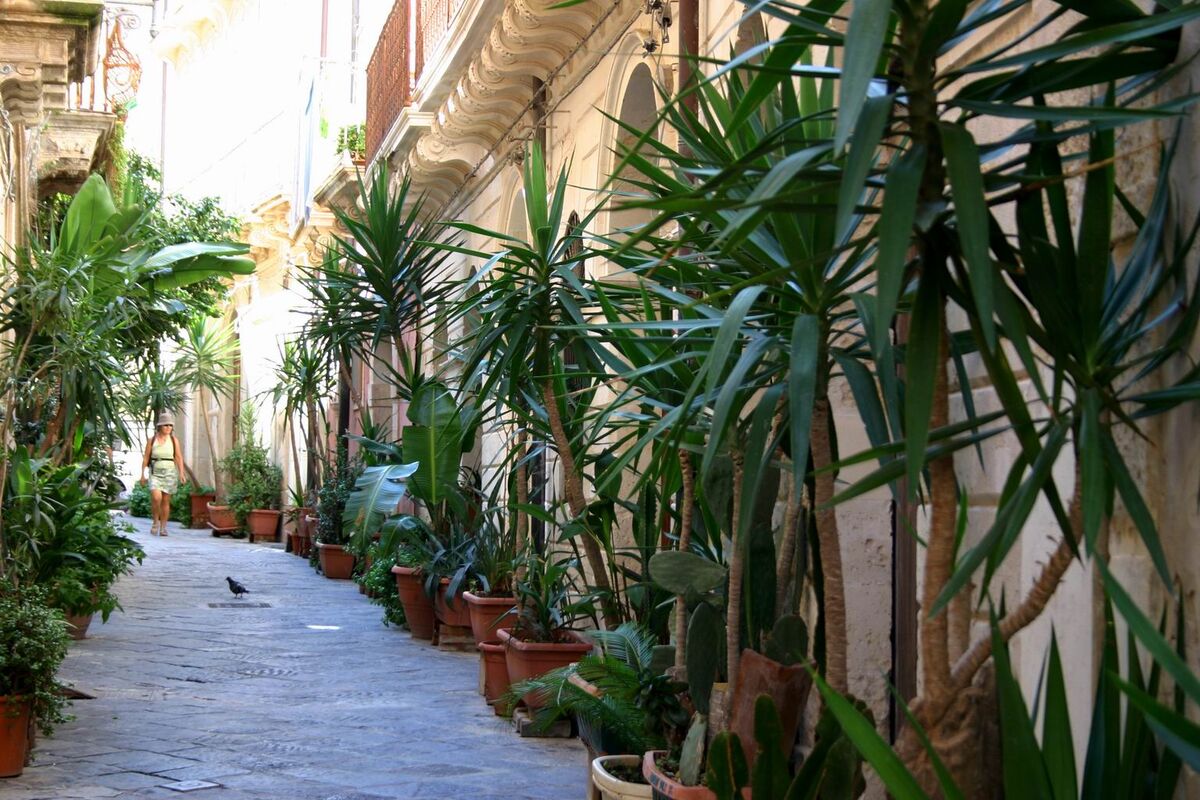 Giudecca. Siracusa
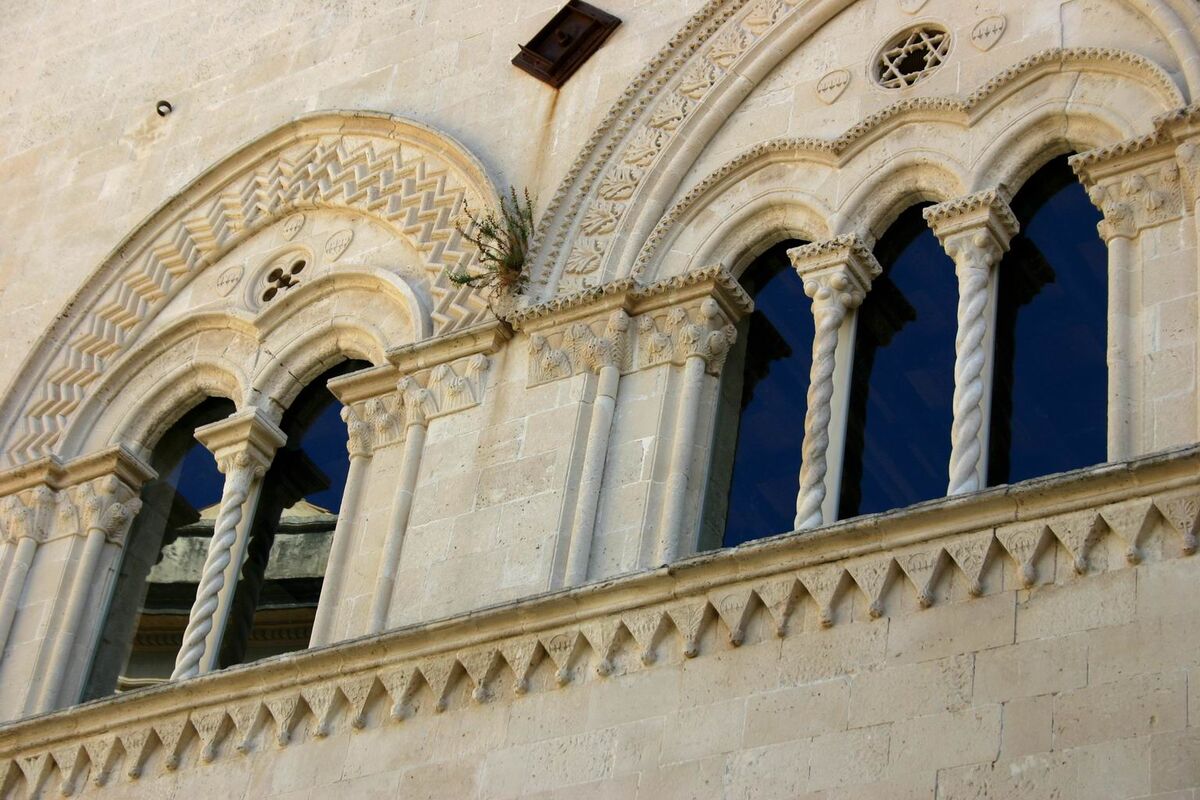 Montalto Palace. Siracusa
Key places for an itinerary exploring Jewish roots include:
- The Miqweh of Casa Bianca: considered one of the oldest Jewish ritual baths in Europe, this site is an architectural marvel. The miqweh is carved 18 meters (nearly 60 feet) underground to reach Ortigia’s water table, standing as a testament to the vital importance of ritual purity for this community.
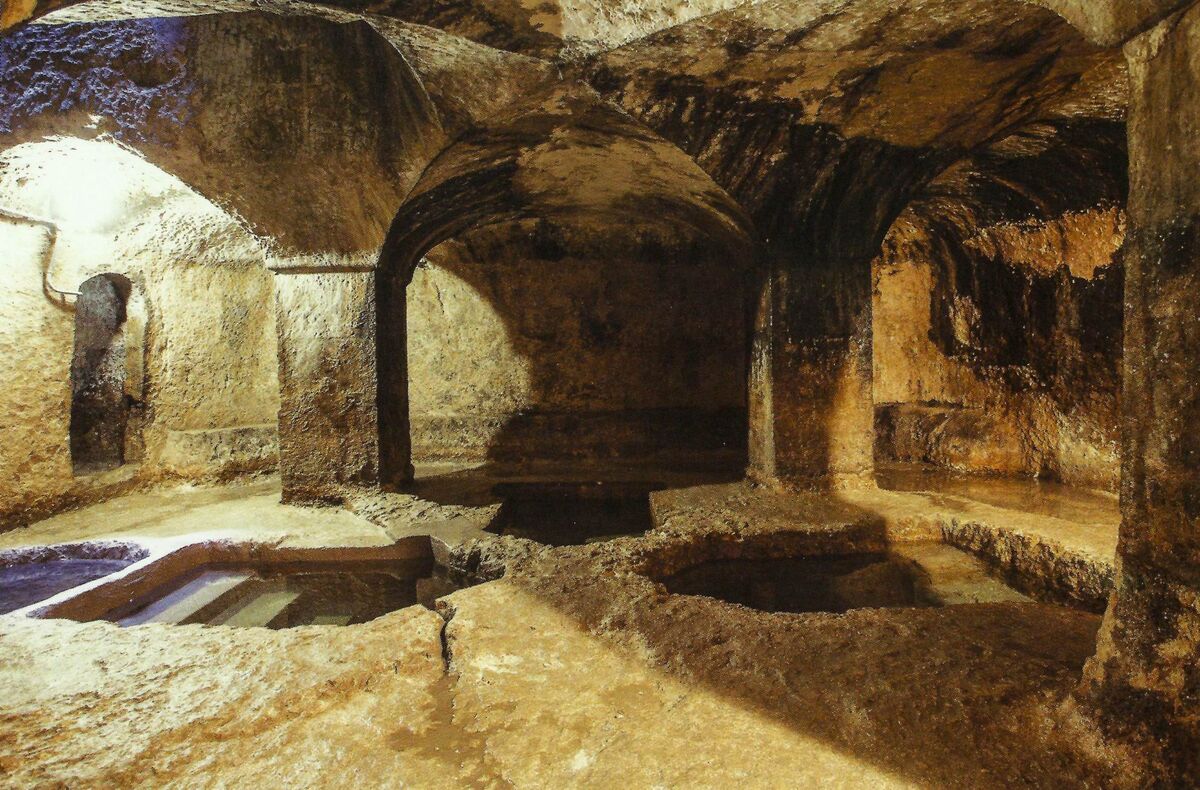 Miqweh of Casa Bianca (Hotel alla Giudecca). Siracusa
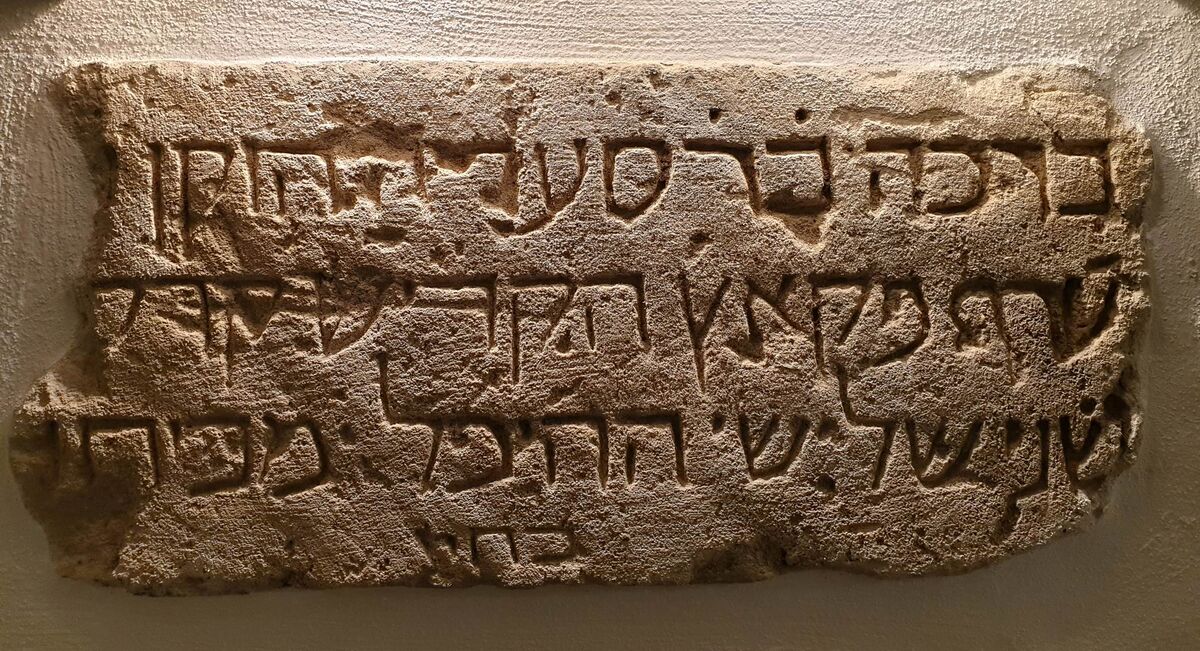 Judeo-Arabic inscription at Hotel alla Giudecca. Siracusa
- San Giovannello Church: While it stands today as a church, archival documents from 1496 - just four years after the expulsion - and a Judeo-Arabic inscription embedded in the apse wall confirm that this building was once the Meschita Judeorum, the city's central synagogue.
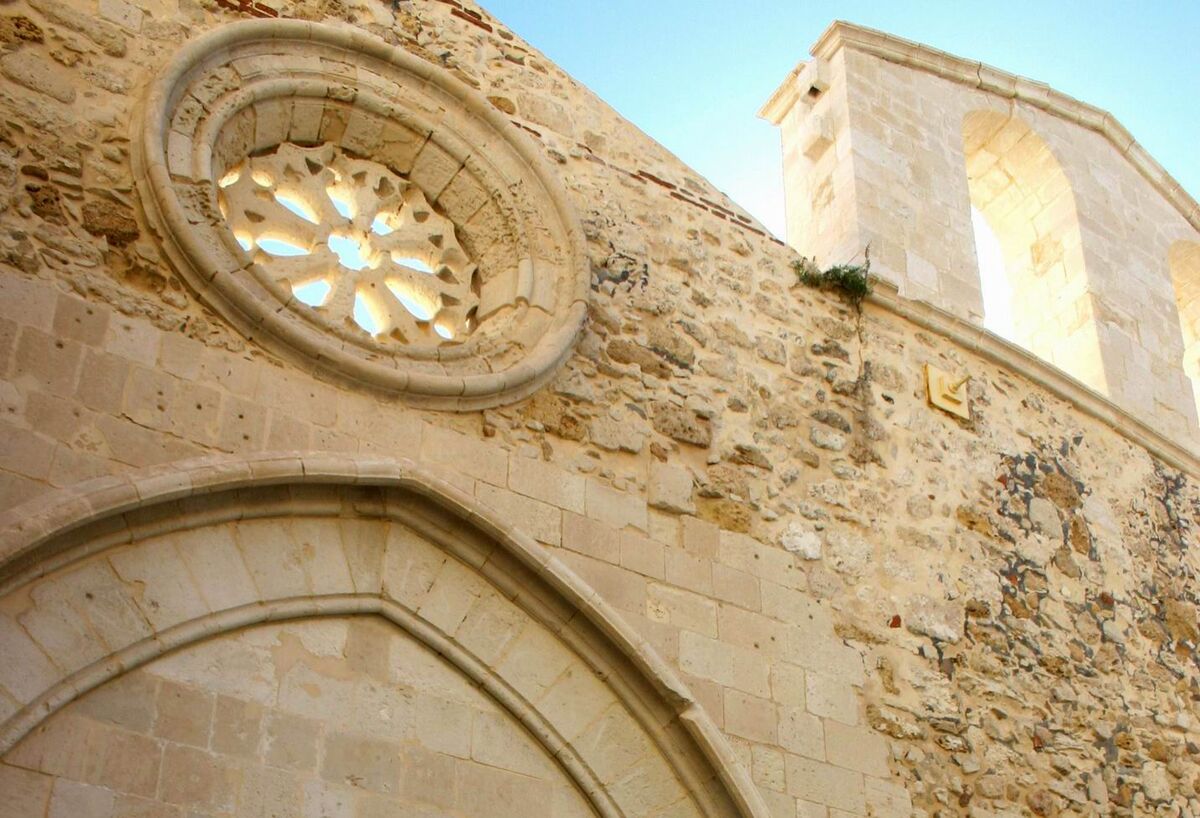 Church of San Giovanni Battista - Former Synagogue. Siracusa
- Jewish tombstones at Museo Bellomo: primarily dating back to the 15th century, were repurposed for Spanish fortifications and rediscovered in the late 19th century. These historic, inscribed stones are now displayed in the courtyard of the Regional Gallery at Palazzo Bellomo.
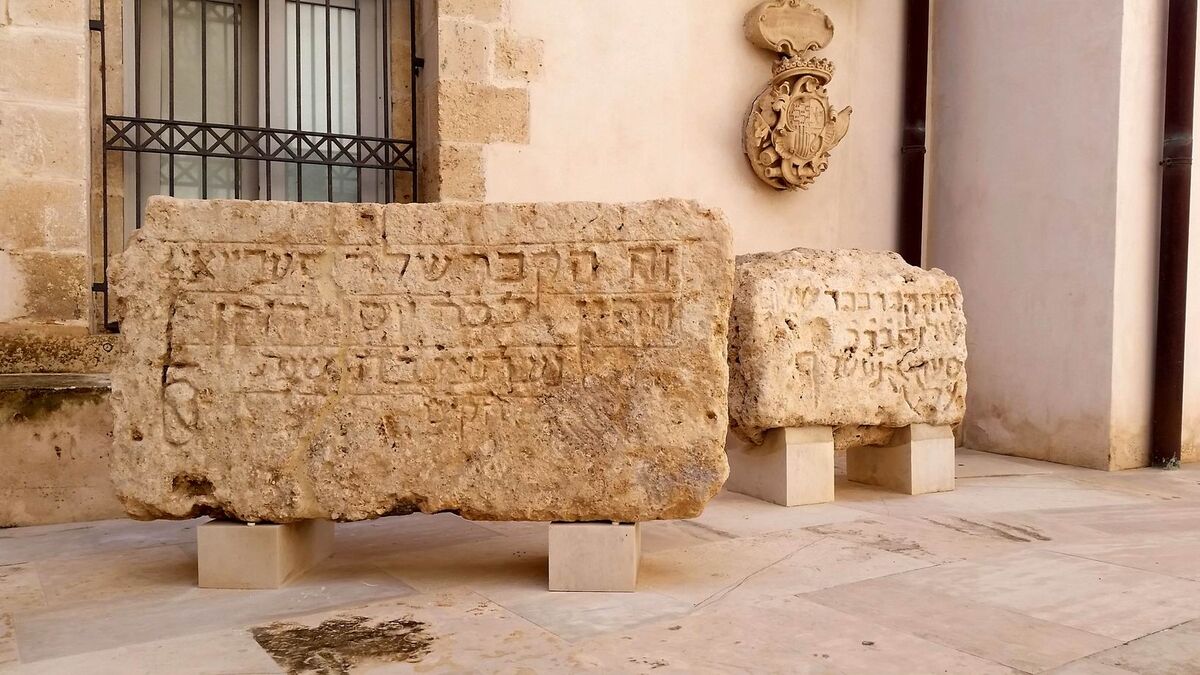 Jewish Tombstones at Museo Bellomo. Siracusa
The Aron of Agira: A Medieval Jem (1454)
In this small town in the Enna area, the Chiesa del Santissimo Salvatore preserves an old Aron ha-Kodesh (holy ark or cabinet where the Torah scrolls were kept), dating back to 1454. Originally built for a synagogue on Via Santa Croce, the stone structure - unlike most examples constructed in wood - was long mistaken for a medieval portal after the 1492 expulsion of the Jewish community. Its true identity was revealed only in 1996, when scholars deciphered the Hebrew inscription, reading: “House of Jacob, come, let us walk in the light.”
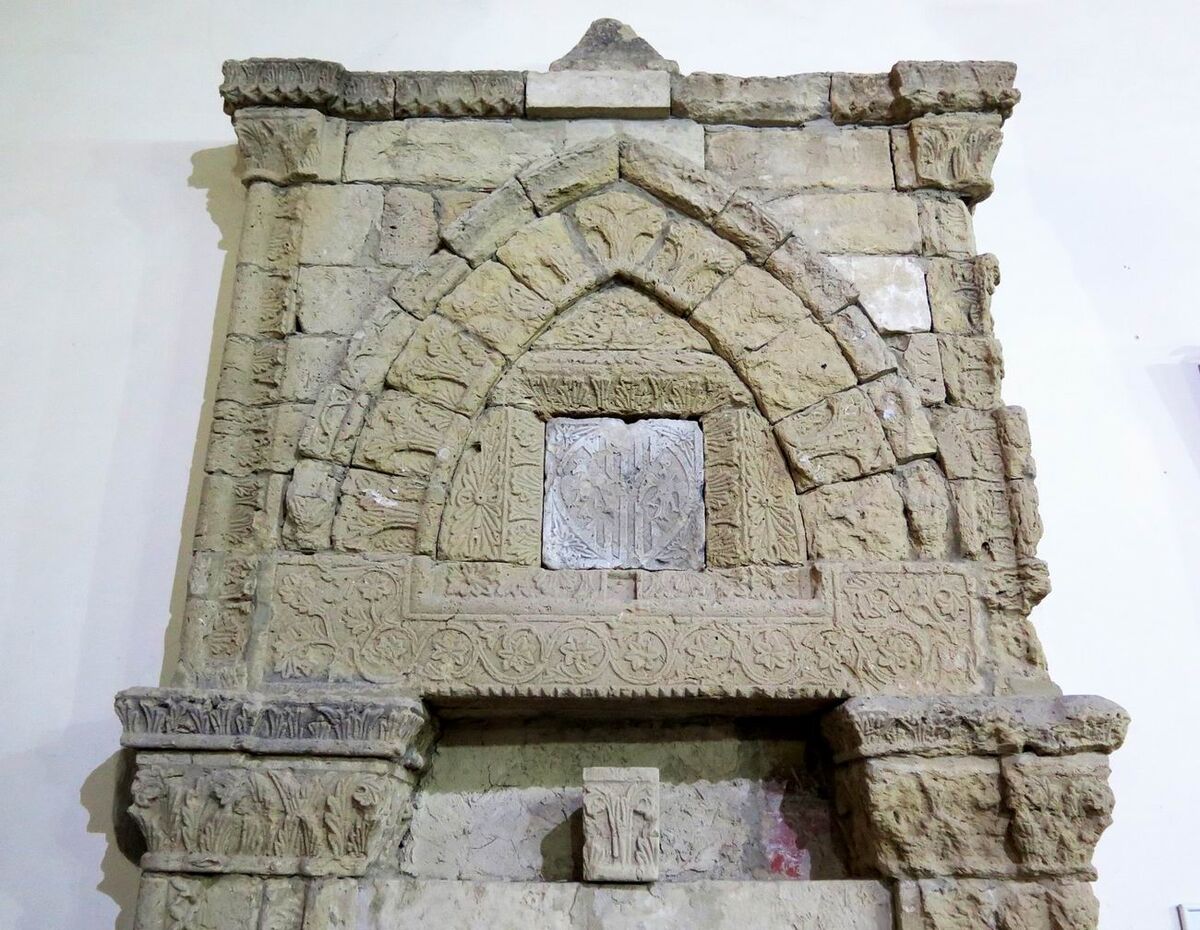 The Aron of Agira
Palermo and Western Sicily
Palermo was once home to the largest Jewish community in Sicily, numbering around 5,000 people. At its height, this vibrant community played a central role in the city’s cultural and economic life. The layout of the former Giudecca can still be traced through the heart of the old city. Its boundaries stretched between Piazza Santi Quaranta Martiri and Piazza del Ponticello to the south, and Via San Cristoforo to the north. Walking these streets today, it is still possible to sense the footprint of a once-thriving neighborhood - not only through the urban layout, but also thanks to the evocative street names that preserve the memory of its Jewish past.
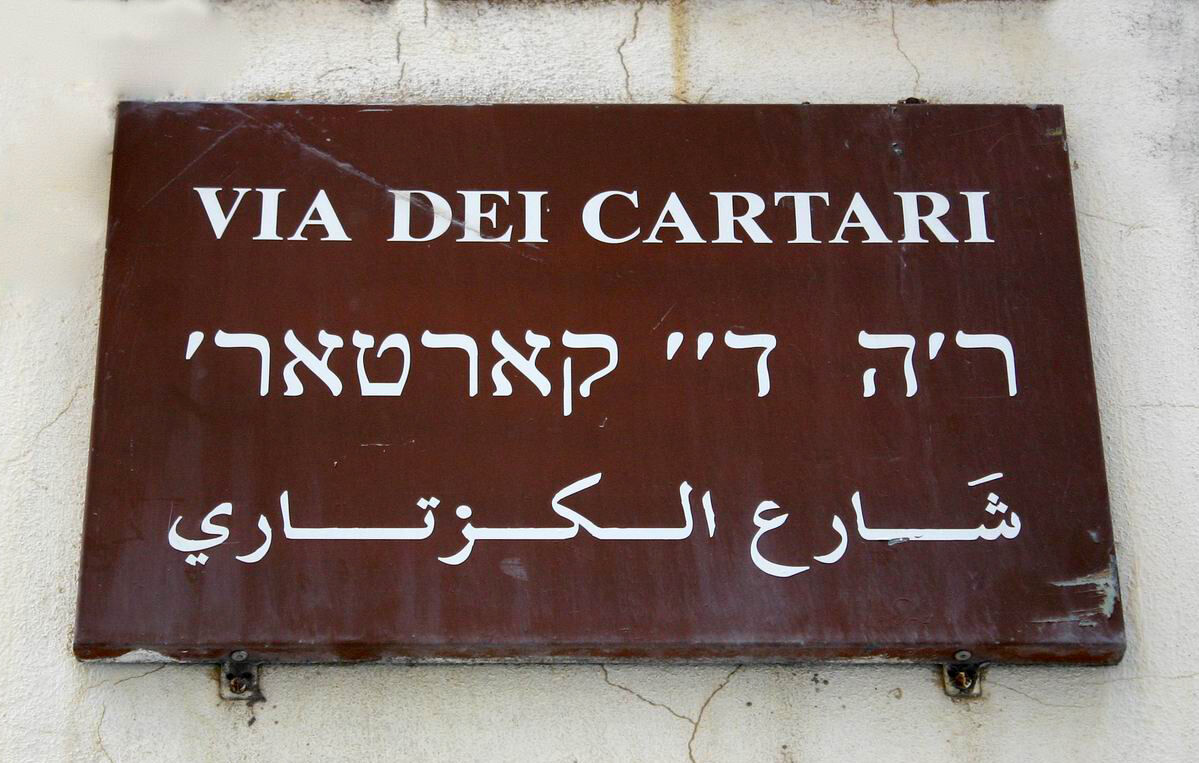 Jewish District. Palermo
Recent archaeological investigations and archival research have brought new insights to light. The remains of a probable miqweh have been uncovered, along with the site of the synagogue - part of a larger communal complex that also included a hospital. This complex was located in the area now occupied by the Chiesa di San Nicolò da Tolentino and the Archivio Storico Comunale di Palermo. Today, visitors to this Archivio Comunale can also view the original document of the Edict of Granada, in its Sicilian-language version, issued by King Ferdinand the Catholic and Queen Isabel to expel the Jews from the territories of the Spanish Crown - a powerful and sobering testament to the events that brought this flourishing community to an abrupt end.
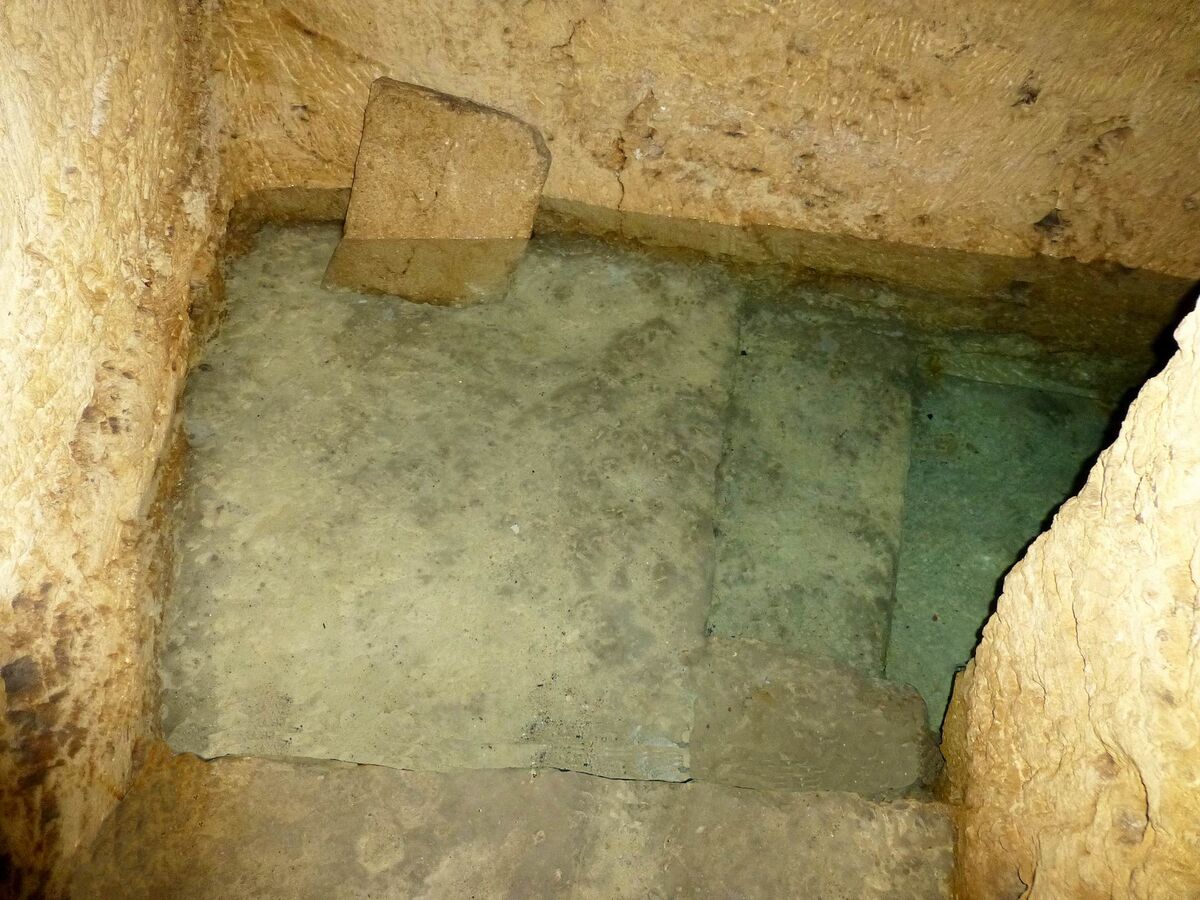 Miqweh. Palermo
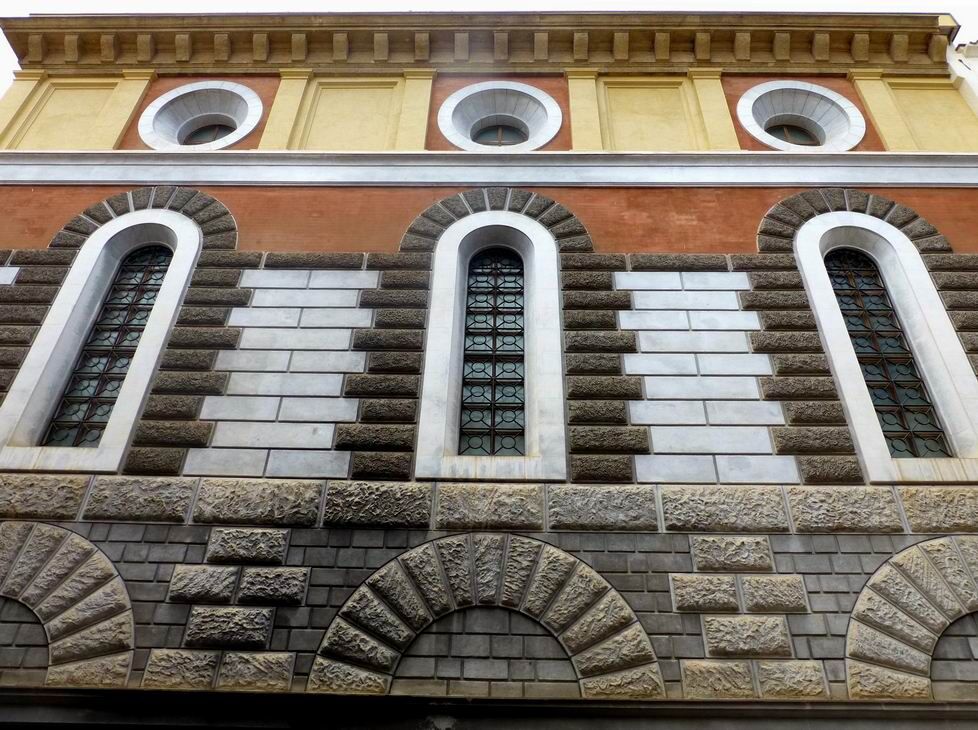 Archivio Storico Comunale. Palermo
In westernmost part of Sicily, towns like Trapani, Marsala, and Erice were major centers of Jewish trade and culture. Walking through these historic districts, travelers can trace the commercial networks that once connected Sicily to Spain and North Africa.
A Unique Feature: the Judeo-Arabic Language
One of the most remarkable aspects of Sicilian Jewry was its language. Even while living in a predominantly Latin environment, Sicilian Jews spoke and wrote in Judeo-Arabic, a local Arabic dialect written with Hebrew characters. This linguistic and cultural fusion made Sicilian Jews key intermediaries in Mediterranean trade and scholarship. Their identity also reflected the island’s broader role as a crossroads between Europe, North Africa, and the Middle East.
The Tragedy of 1474 and the Expulsion of 1492
The long era of relative coexistence met a tragic prelude on August 15th, 1474, with the massacres of Modica and Noto. Triggered by false accusations of blasphemy, these riots caused approximately 360 deaths in Modica and 18 in Noto. The grief of this tragedy was captured in a haunting qinah (elegy) written in Judeo-Arabic, the only internal Jewish record of these events to survive.
The final chapter began in 1492 with the Edict of Granada. Many Jews fled to the Ottoman Empire, North Africa, or mainland Italy. Others became conversos, preserving traditions in secret for generations. The expulsion ended more than a millennium of continuous Jewish life on the island, but it did not erase memory. Jewish traces can still be found in the surnames of many families - descendants of those who remained in Sicily and converted - as well as in street names, in the island’s art and architecture, and in its agricultural and artisanal traditions.
Visiting Today
For the curious traveler, Sicily offers the chance to discover the historical significance of Jewish heritage within its rich cultural mosaic. We at Uncovered Sicily invite you to walk the ancient streets of the giudecche, trace the symbols etched into old tombs, explore medieval mikvaot, and listen to the stories of many Sicilian Jews of the past. Through our dedicated Jewish heritage tours, led by experts in Jewish antiquities, you can reconnect with a legacy that was never truly erased
Please note that this article offers only a brief introduction to the Jewish presence in Sicily and is not intended to provide an exhaustive account of this profoundly complex subject.
I would like to thank my friends and colleagues Chiara Utro and Moshe Ben Simon for the many moments of discussion and for the valuable suggestions that contributed to the publication of this article.